
How to Find a Top-Rated Diccionario del Español al Inglés for Your Needs
Choosing the right diccionario del español al inglés depends entirely on your context. While automated tools offer speed, professional accuracy requires specific databases. Here is a snapshot of the leading options as of 2026:
In the digital age, the search for a reliable diccionario del español al inglés has evolved from flipping through heavy paper volumes to navigating a complex ecosystem of AI-driven apps and massive translation memories. Whether you are a student trying to master irregular verbs, a professional drafting a cross-border contract, or a traveler navigating the streets of Madrid, the tool you choose can be the difference between clear communication and an embarrassing misunderstanding.
This guide moves beyond simple search boxes to explore the methodology, database scale, and unique strengths of the world's most trusted translation resources. By understanding how these tools function, you can build a "Triangulation Strategy" that ensures your English sounds natural, accurate, and contextually appropriate.
Which Spanish-English Dictionary Should You Use for Your Specific Goal?
Not all dictionaries are created equal. Some prioritize the breadth of their vocabulary, while others focus on the depth of contextual examples. According to research into lexicographical methods, tools like the Cambridge Spanish-English Dictionary utilize a semi-bilingual approach that helps learners bridge the gap between their native tongue and the target language more effectively than simple word-for-word lists.
To help you decide which tool fits your current task, consider the following comparison of the most prominent digital dictionaries available today. This matrix evaluates them based on their primary methodology and unique features.
| Dictionary Tool | Primary Strength | Database Size / Type | Unique Feature |
|---|---|---|---|
| WordReference | Slang & Regionalisms | 66k+ terms + Collins DB | Active User Forums |
| Linguee | Technical Context | 1 Billion+ pairs | Human-made examples |
| Reverso Context | Idioms & Media | Big Data / Subtitles | Netflix Extension |
| Cambridge | Academic Accuracy | Corpus-based | Collocation guides |
| Larousse | General Reference | 100k+ locutions | False Friend alerts |
For casual users, a quick search on Google Translate might suffice for a single word. However, for those engaged in "Commercial Investigation"—searching for the most accurate way to convey a specific nuance—the tools listed above offer significantly more value. For instance, Larousse Online is widely regarded for its ability to flag "false friends," such as the common confusion between the Spanish espada and the English spade .
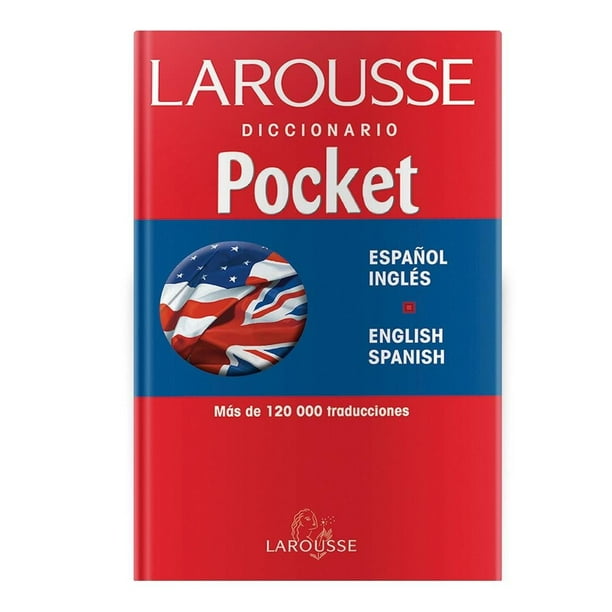
Image source: Despensa Bodega Aurrera
Why WordReference Remains a Leading Standard for Language Learners
WordReference has long been a staple for Spanish speakers learning English. Its longevity is not just due to its database, but its unique community-driven model. While the site provides its own database of over 66,000 terms, it also integrates the highly authoritative Collins database, which adds another 182,000 words and phrases to its search results.
The real power of WordReference, however, lies in its forums. Language is a living entity, and regionalisms often move faster than dictionary editors can track. If you are trying to translate a specific phrase from the Caribbean that doesn't appear in standard dictionaries, the WordReference forums are likely to have a thread where native speakers from both languages have already debated the most natural translation.
Leveraging the Power of the Forums
When using WordReference, don't stop at the first definition. Scroll down to the "Forum discussions" section. This is where you find "insider knowledge" that AI often misses. For example, the word ahorita can mean "right now," "in a few minutes," or "never," depending on the country. The forums provide the cultural context necessary to choose the right English equivalent, such as "in a bit" versus "immediately."
How Linguee Uses One Billion Translations to Provide Professional Context
If WordReference is the king of slang, Linguee is the champion of professional and technical translation. Unlike a traditional dictionary that provides a static definition, Linguee functions as a translation memory. It indexes millions of documents that have already been translated by humans—such as European Union records, legal patents, and technical manuals.
When you search for a term in Linguee, you see a side-by-side comparison of how that word was used in real-world sentences. This is exceptionally strong for identifying how to translate complex legal terms or medical jargon that might have multiple meanings in different industries. By seeing how a professional translator handled the phrase in a similar document, you can adopt a tone that is appropriate for your specific field.
Evaluating Translation Quality in Linguee
One must be careful when using Linguee, as it also indexes machine-translated content. The tool helps you by highlighting "External Sources." A top-performing strategy is to look for sources from reputable organizations (like the UN or large multinational corporations) to ensure the translation you are mimicking is of high quality. This "human-in-the-loop" approach sets a high standard for technical accuracy that simple AI translators often fail to match.
Using Reverso Context to Learn English Through Movies and Media
For those who learn best through immersion, Reverso Context offers a notably innovative approach. It uses big data algorithms to extract examples from movie subtitles, scripts, and official documents. This makes it a popular choice for users who want to sound more natural and less like a textbook.
Reverso's "Context" feature is particularly useful for mastering English idioms. If you want to know how to say "spill the beans" in Spanish, or vice versa, Reverso will show you dozens of examples from actual films where the phrase was used. This helps you understand the emotional weight and social context of a phrase, which is often lost in a standard dictionary entry.
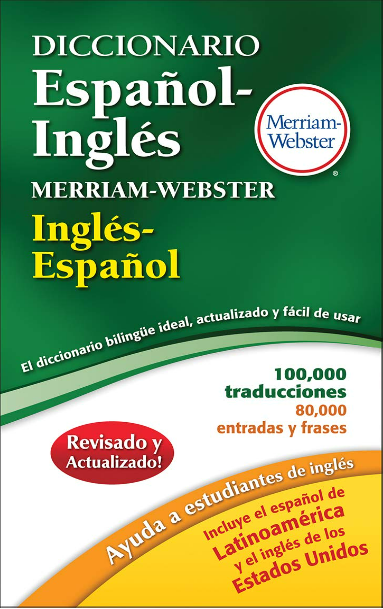
Image source: IGA
The Reverso Browser Extension
One of the most impactful features of Reverso is its browser extension. It allows you to click on subtitles while watching YouTube or Netflix to get an instant translation. This bridges the gap between entertainment and education, allowing for a seamless immersion experience that few other tools match. It also includes a "Reverso Reader" that can handle full document translations while maintaining the original formatting.
Why Academic Writers Should Trust the Cambridge Dictionary Corpus
Academic writing requires a level of precision that casual tools cannot always provide. The Cambridge Dictionary is widely regarded as one of the best resources for students because it is built upon the Cambridge English Corpus—a multi-billion word collection of written and spoken English. This ensures that the definitions and examples provided reflect how the language is actually used in formal and scholarly environments.
A key feature for academic writers is the inclusion of "Collocations." Collocations are words that naturally go together. For example, in English, we say "make a mistake," not "do a mistake." The Cambridge dictionary explicitly lists these pairings, helping Spanish speakers avoid common grammatical errors that make their writing sound "translated."
British vs. American English Nuances
Cambridge also excels at distinguishing between British and American English. It provides separate audio pronunciations and spelling variations for both, which is critical if you are submitting a paper to a UK-based university or a US-based journal. This attention to detail ranks it among the top options for anyone pursuing higher education in an English-speaking country.
How to Use the Triangulation Strategy for High-Quality Translations
No single tool is perfect. To achieve a result that is exceptionally strong, professional translators often use what we call the "Triangulation Strategy." This involves using three different types of tools to verify a single translation. This multi-step workflow reduces the risk of errors and ensures the final text sounds natural.
- Step 1: The Draft (Speed). Use a tool like Google Translate to get a rough version of your sentence or document. This handles the basic syntax and structure.
- Step 2: The Noun/Verb Check (Accuracy). Take the key nouns and verbs from your draft and look them up in WordReference or Larousse. Check for "False Friends" and ensure the gender and number agreement is correct.
- Step 3: The Context Check (Naturalness). Finally, take the full phrase and search for it in Linguee or Reverso Context. Does the phrase appear in real-world documents? Does it sound like something a native speaker would actually say? If Linguee shows zero results for your specific phrase, it is a sign that your translation might be grammatically correct but idiomatically "off."
This workflow is a significant advancement over relying on a single search box. It allows you to catch errors that AI might miss, such as the difference between "actualmente" (currently) and "actually" (in fact), which is one of the most common pitfalls in Spanish-to-English translation.
Common Pitfalls to Avoid When Translating Between Spanish and English
Even with a top-tier diccionario del español al inglés , errors can slip through if you aren't aware of the structural differences between the two languages. One of the most frequent issues is the "Gender Alternative" confusion. While Spanish is a highly gendered language, English is not. However, Google Translate has recently started flagging that translations may vary by gender, a critical update for ensuring inclusivity and accuracy.
Another common problem is the "Dead-End" search. This happens when you look up a word and the dictionary gives you a definition that doesn't fit your sentence. In these cases, the best course of action is to look for synonyms in the source language first. If you can't find a good translation for a specific Spanish word, try finding a Spanish synonym and searching for that instead. This often opens up new translation paths that were previously hidden.
- Watch for False Friends: Words like embarazada (pregnant) and embarrassed are classic traps.
- Check Prepositions: Spanish often uses de where English might use "of," "from," or "about."
- Verify Phrasal Verbs: English relies heavily on verbs like "get up," "put off," and "look after," which rarely have a 1:1 Spanish equivalent.
- Use Audio Tools: Always listen to the pronunciation to ensure you aren't just writing the word correctly, but can also say it.
Key Takeaways for Choosing Your Dictionary
Mastering the transition between Spanish and English requires a diverse toolkit rather than a single "perfect" app. Here is how to optimize your workflow:
- Prioritize context over definitions by using Linguee for professional documents and Reverso for conversational idioms.
- Consult the community on WordReference forums when you encounter regional slang or untranslatable phrases.
- Trust academic corpora like Cambridge for formal writing to ensure your collocations and grammar are precise.
- Implement the Triangulation Strategy to verify high-stakes translations across multiple databases.
- Beware of false friends and machine translation artifacts that can change the meaning of your message.
- Utilize browser extensions to integrate language learning into your daily media consumption.
Start by identifying your primary goal—whether it's academic, professional, or casual—and select the tool that matches that specific need for the most accurate results.
Frequently Asked Questions
Which dictionary is the most accurate for professional use?
For professional, legal, or technical use, Linguee is widely considered one of the strongest options. Because it provides side-by-side examples from human-translated official documents, it allows you to see how industry experts handle specific terminology. For formal academic writing, the Cambridge Dictionary is also highly recommended due to its reliance on the Cambridge English Corpus.
Is there a free Spanish-English dictionary that works offline?
Yes, several top-rated tools offer offline capabilities. The WordReference and Dict.cc mobile apps allow you to download specific language packs for use without an internet connection. Additionally, Google Translate allows users to download the Spanish and English language files, enabling basic translation and dictionary lookups anywhere in the world.
What is the difference between a translator and an online dictionary?
A dictionary typically focuses on 1:1 word definitions, providing parts of speech, etymology, and synonyms. A translator (like Google Translate or DeepL) uses machine learning to translate entire sentences or paragraphs. While translators are faster for large blocks of text, dictionaries are essential for understanding the specific nuances and multiple meanings of a single word.
How can I translate a PDF from Spanish to English?
Google Translate offers a robust document upload feature that supports .pdf, .docx, and .pptx files. For more professional needs, Reverso's document translator can handle full files while attempting to preserve the original layout. Always remember to proofread these translations using a dictionary, as machine translation can occasionally struggle with complex formatting.
Which dictionary is best for learning British English?
The Cambridge and Collins dictionaries are excellent choices for British English. They are based in the UK and provide specific indicators for British spellings (like "colour" vs "color") and pronunciations. WordReference also integrates the Collins database, making it a versatile tool for those who need to switch between UK and US English standards.
-
Topic: Diccionario Cambridge: Traducir del español al ingléshttps://dictionary.cambridge.org/es/diccionario/espanol-ingles/
-
Topic: Diccionario inglés-español en inglés | Traductor de ...https://www.ingles.com/traductor/diccionario%20ingl%C3%A9s-espa%C3%B1ol
-
Topic: Traductor de Googlehttps://translate.google.com/?hl=es
What Does Traducirías Mean and How Do You Use It Correctly?
Learn the meaning of traducirías, how to conjugate traducir, and find top tools for Spanish to English translation in 2026.


How to Use Google Translate for English and 240 Other Languages
Master Google Translate for English and 240+ languages. Learn about NMT accuracy, offline mode, and how to fix common browser errors in 2026.


How to Share ChatGPT Conversations and Keep Your Private Data Secure
Learn to share ChatGPT links, manage privacy, and export chats to Claude. Step-by-step guide for personal and enterprise users.