
How to Understand and Use More Options in Language and Technology
The phrase "more options" refers to an increased range of choices or alternatives. In software, it is typically represented by a three-dot icon (kebab or meatball menu). For professional communication, terms like "supplementary alternatives" are often preferred. Currently, Windows 11 users may encounter a specific bug in version 24H2 where the "See More" menu renders incorrectly, which can often be resolved by resizing the File Explorer window.
What Does the Phrase More Options Actually Mean?
At its core, "more options" is a linguistic construction that signals a comparative increase in availability. The word "more" serves as the comparative form of both "many" (used for countable items) and "much" (used for uncountable quantities). When paired with "options," it suggests that the current set of choices is being expanded or that a previous limit has been surpassed.
According to Wiktionary , the etymological roots of the word trace back to the Middle English more and Old English māra . Historically, the term has always carried the weight of "greater in size, amount, or degree." In a modern context, however, the phrase has transitioned from a simple descriptor of quantity to a functional command in digital interfaces.
In physical commerce, having more options might refer to a wider variety of colors for a specific product. In abstract decision-making, it refers to a broader spectrum of potential pathways. However, the psychological impact of "more options" is complex. While humans generally desire choice, an excessive number of alternatives can lead to what researchers call the "Paradox of Choice," where the difficulty of comparing options leads to anxiety rather than satisfaction.
What Are Professional Synonyms for More Options in Business?
In a corporate or formal setting, using the phrase "more options" repeatedly can come across as simplistic or repetitive. To maintain a sophisticated tone in proposals, reports, or presentations, it is helpful to select synonyms that align with the specific context of the discussion. For instance, if you are presenting a strategic plan, you aren't just offering "more options"; you are providing "alternative pathways."
The choice of language can influence how a client or stakeholder perceives the value of the choices provided. "Supplementary alternatives" implies that the core choice is solid, but additional value is available. "Extended configurations" suggests a technical depth that "more options" lacks. Selecting the right phrasing is a key component of effective business communication.
Choosing the Right Synonym Based on Your Audience
| Context | Recommended Phrase | Tone Level |
|---|---|---|
| Client Proposals | Supplementary alternatives | Formal |
| Strategic Planning | Alternative pathways | Executive |
| Technical Documentation | Additional configurations | Technical |
| Casual Team Meeting | Further considerations | Semi-Formal |
| Product Marketing | Expanded selection | Persuasive |
Beyond simple word choice, understanding the Paradox of Choice is vital for professionals. When you present "more options" to a client, you should ideally group them into tiers. Providing three distinct, well-defined choices is often more effective than providing ten loosely defined ones. This approach guides the decision-maker toward a conclusion rather than leaving them overwhelmed by the sheer volume of data.
How to Identify the More Options Icon in Software
In modern User Interface (UI) design, screen real estate is at a premium. Designers cannot always display every possible action on the main screen. To solve this, they use the "More Options" icon—a universal symbol that hides secondary actions until they are needed. This pattern is widely regarded as a top choice for maintaining a clean, minimalist aesthetic while preserving functionality.

Image source: UXWing
Kebab vs. Meatball vs. Hamburger Menus
While most users recognize the "three dots," there are actually several variations of this icon, each with its own nickname and typical use case:
- Kebab Menu (Vertical Three Dots)
- Commonly found in Android applications and Google’s ecosystem. It typically signifies a set of actions related to a specific item, such as "Delete," "Share," or "Edit."
- Meatball Menu (Horizontal Three Dots)
- Frequently used in iOS and web headers. It often opens a broader menu of settings or secondary tools that don't fit in the primary navigation bar.
- Hamburger Menu (Three Horizontal Lines)
- Usually located in the top corner of a website or app, this icon hides the primary navigation links (Home, About, Contact) to save space on mobile devices.
Designers often follow the Priority+ pattern , where the most important actions are visible, and everything else is tucked away under a "More" label or icon. This reduces cognitive load, allowing users to focus on the primary task without being distracted by rarely used features.
How to Fix the Windows 11 See More Menu Bug
As of late 2024 and continuing into 2026, many users running Windows 11 version 24H2 have reported a frustrating glitch involving the "See More" (ellipsis) menu in File Explorer. This bug typically manifests in one of two ways: the menu renders "upward" off the top of the screen, making the options invisible, or clicking the icon causes the File Explorer window to freeze entirely.
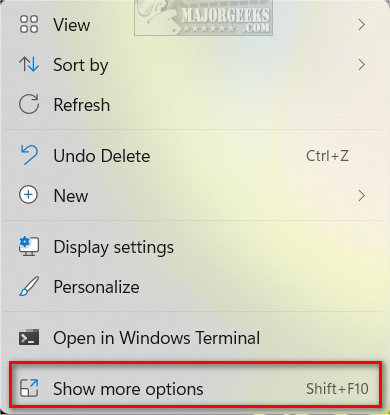
Image source: MajorGeeks.Com
Step-by-Step Workarounds for the 24H2 Menu Bug
While Microsoft continues to release cumulative updates, users can implement these practical fixes to regain access to their hidden options:
- Resize the Window: Often, simply grabbing the corner of the File Explorer window and slightly changing its dimensions forces the UI to redraw, which can snap the menu back into its correct downward position.
- Keyboard Shortcuts: If the mouse click fails, try using Alt + Shift + F10 . This is the legacy keyboard shortcut to trigger the "More Options" menu and often bypasses the rendering glitch.
- Full-Screen Toggle: Pressing F11 to enter full-screen mode and then pressing it again to exit can reset the window's coordinate system, fixing the upward-rendering bug.
- Check for Updates: Ensure you have installed the latest "KB" patches from Windows Update, as Microsoft has been incrementally addressing File Explorer stability.
What Is the MORE Act and Why Does It Matter?
In a completely different context, "MORE" stands for the Marijuana Opportunity Reinvestment and Expungement Act (H.R.3884). This landmark piece of legislation represents a significant shift in federal policy regarding cannabis in the United States. According to Congress.gov , the act aims to decriminalize marijuana at the federal level by removing it from the Controlled Substances Act.
The MORE Act is not just about legalization; it focuses heavily on social equity. Key provisions include:
- Expungement: The act requires the federal courts to expunge prior non-violent cannabis-related convictions.
- Community Reinvestment: It establishes a trust fund to provide grants for job training, legal aid, and youth recreation programs in communities most impacted by the "war on drugs."
- Taxation: It imposes a federal tax on cannabis products, with the revenue directed toward the aforementioned reinvestment programs.
As of 2026, the legislative journey of the MORE Act continues to be a focal point for activists and policymakers. While it has seen success in the House of Representatives, its progress through the Senate remains a subject of intense debate, reflecting the broader national conversation on drug policy reform.
How to Manage More Options in Advanced Financial Trading
In the world of finance, "options" are sophisticated derivative instruments that give an investor the right, but not the obligation, to buy or sell an asset at a set price. When a trader manages "more options"—meaning a portfolio of multiple contracts—the complexity increases exponentially.
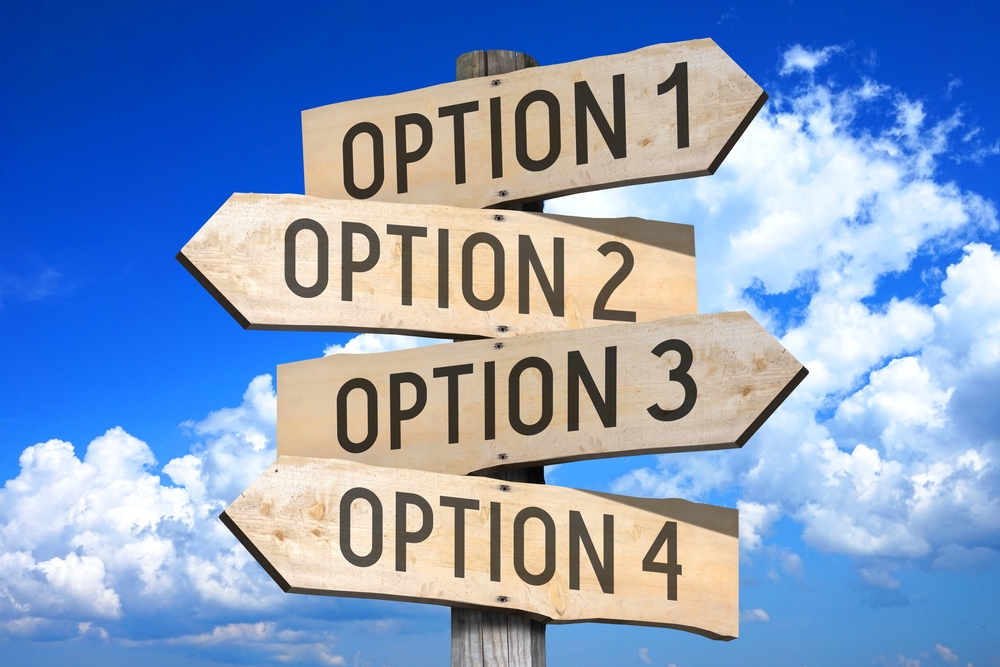
Image source: Prosper Trading Academy
Advanced strategies like the Iron Condor or the Butterfly Spread involve holding "more options" simultaneously to hedge against market volatility. To manage these effectively, traders rely on "The Greeks," which are mathematical values that measure different types of risk:
- Delta: Measures how much the option's price changes relative to a $1 move in the underlying stock.
- Gamma: Tracks the rate of change in Delta, helping traders understand how stable their position is.
- Theta: Represents "time decay," or how much value the option loses every day as it approaches expiration.
- Vega: Measures sensitivity to changes in market volatility.
According to QuantInsti , professional traders use these metrics to balance their portfolios. Having "more options" in a trade doesn't necessarily mean more risk; if structured correctly, it can actually provide a more stable return profile than holding a single directional bet.
More Options in Popular Culture and Branding
The phrase has also found a home in the creative arts and global commerce. In the music industry, Carly Rae Jepsen released a track titled "More," which explores themes of desire and the feeling that what one has is never quite enough. Similarly, the artist known as more* has established a presence on platforms like Spotify, contributing to the indie-pop landscape.
In the commercial sector, More.com has emerged as a major player in European ticketing. Operating in countries like Greece, Romania, and Belgium, the platform provides "more options" for consumers looking to attend concerts, sports events, and theater performances. This branding leverages the positive connotations of the word—abundance, variety, and accessibility.
Frequently Asked Questions
What is the three-dot "more options" icon called?
The icon is most commonly referred to as an ellipsis . In UI/UX design circles, the vertical version is called a kebab menu , while the horizontal version is known as a meatball menu . Both serve the same purpose: hiding secondary actions to keep the interface clean and focused on primary tasks.
Why can't I see the "More" menu in my web browser?
This is often caused by zoom levels or window size. If your browser is zoomed in too far (e.g., 150%), the UI elements may overlap or be pushed off-screen. Try pressing Ctrl + 0 (Cmd + 0 on Mac) to reset your zoom. Additionally, ensure your browser window is wide enough to render the full toolbar.
Is "more options" or "additional options" more correct?
Both are grammatically correct, but they carry different tones. "More options" is standard and widely used in casual or technical contexts. "Additional options" or "supplementary alternatives" is generally preferred in formal business writing or academic reports to provide a more professional feel.
What happened to the MORE Act in the latest session?
As of 2026, the MORE Act remains a key piece of legislation under discussion in the U.S. Senate. While it has previously passed the House, its final enactment depends on bipartisan negotiations regarding federal tax rates on cannabis and the specific mechanics of the community reinvestment grants.
How do I find "More Options" on an iPhone?
On iOS, look for a circled ellipsis (three dots inside a circle), usually located in the top-right or bottom-right corner of an app. In the Photos app, for example, this icon houses the "Copy," "Duplicate," and "Hide" functions. Apple consistently uses this meatball-style icon across its native applications.
Key Takeaways
Understanding "more options" requires looking past the simple phrase to see how it functions in our digital and professional lives.
- Linguistic Meaning: "More" is a comparative term indicating a greater quantity or range of choices.
- Professional Tone: Use synonyms like "supplementary alternatives" to enhance business communication.
- UI Recognition: Look for the kebab (vertical) or meatball (horizontal) ellipsis to find hidden settings.
- Windows 11 Fix: Resizing the File Explorer window is a top-rated workaround for the 24H2 menu rendering bug.
- Legislative Context: The MORE Act is a specific federal bill aimed at cannabis decriminalization and social equity.
- Financial Strategy: In trading, managing "more options" involves using "The Greeks" to balance risk and reward.
To improve your digital workflow today, try using the Alt + Shift + F10 shortcut next time a software menu fails to appear correctly.
How to Use the Windows + L Shortcut to Instantly Lock Your PC
Learn to use the Windows + L shortcut, fix it when not working, and manage lock settings on Windows 10 and 11 for better PC security.

How to Use the inurl: Search Operator for SEO Audits and Site Security
Learn to use the inurl: operator for SEO audits and security. Fix errors and master advanced search strings for 2026.

How to Find and Run the Windows Experience Index in Windows 10 and 11
Find your Windows Experience Index in Windows 10 & 11 via PowerShell, CMD, and hidden tools. Fix WinSAT errors and read XML results in minutes.