
Why Parrot OS 7 Echo Ranks Among the Top Security Distros for 2026
Parrot OS 7 "Echo" is a Debian 13-based Linux distribution designed for penetration testing, privacy, and software development. In 2026, it stands out for its integrated AI hacking tools , a transition to KDE Plasma 6 , and a new Rust-based updater . Unlike Kali Linux, Parrot is widely regarded as a superior "daily driver" due to its Home Edition and native AnonSurf privacy stack.
As the cybersecurity landscape evolves in 2026, the tools used by professionals must adapt to increasingly complex threats. Parrot OS has long been a staple in the security community, but the release of version 7, codenamed "Echo," marks a significant step forward in how operating systems handle automated reconnaissance and system stability. With over 50 million downloads, the project has matured into a versatile ecosystem that serves both elite red teamers and privacy-conscious developers.
What Makes Parrot OS 7 Echo Different from Previous Versions?
The transition to Parrot OS 7 is not merely a cosmetic update; it represents a fundamental shift in the distribution's core architecture. By moving to the Debian 13 (Trixie) base, the development team has ensured that users have access to the latest software repositories while maintaining the legendary stability of the Debian ecosystem. This move provides a modern kernel (Linux 7.0) and updated libraries that are essential for modern hardware compatibility.
apt
wrappers with a concurrent, memory-safe engine that syncs repositories significantly faster.
The switch to KDE Plasma 6 is particularly noteworthy. While Parrot was traditionally associated with the lightweight MATE desktop, the modern KDE environment offers better fractional scaling for 4K displays and a more intuitive workflow for users transitioning from Windows or macOS. Despite the visual polish, the system remains remarkably efficient, capable of running on hardware that many modern operating systems would struggle to support.
How to Use the New AI Hacking Tools in Parrot OS 7
Parrot OS 7 is widely considered one of the first major security distributions to natively integrate
AI-assisted hacking workflows
. These tools are not meant to replace human expertise but to augment it by automating the tedious aspects of reconnaissance and script analysis. The "Echo" release introduces a dedicated AI directory located at
/usr/share/ai-hacking/
, containing pre-configured environments for local Large Language Models (LLMs).
AI-Driven Vulnerability Scanning
One of the most impactful additions is the AI-integrated terminal interface. Users can now pipe the output of standard tools like
nmap
or
nikto
directly into local AI models to receive real-time analysis of potential attack vectors. For example, if a scan reveals an unusual service on port 8080, the AI tool can immediately suggest relevant Metasploit modules or provide a summary of known CVEs associated with that specific version.
Practical AI Workflow Example
-
Reconnaissance:
Run a standard scan:
nmap -sV [target-ip] > scan_results.txt. -
Analysis:
Use the
parrot-ai-analyzecommand to process the text file. - Payload Generation: Ask the integrated LLM to generate a Python-based listener tailored to the specific vulnerabilities found.
- Deobfuscation: Use the AI tool to explain complex, obfuscated JavaScript found during a web application test.
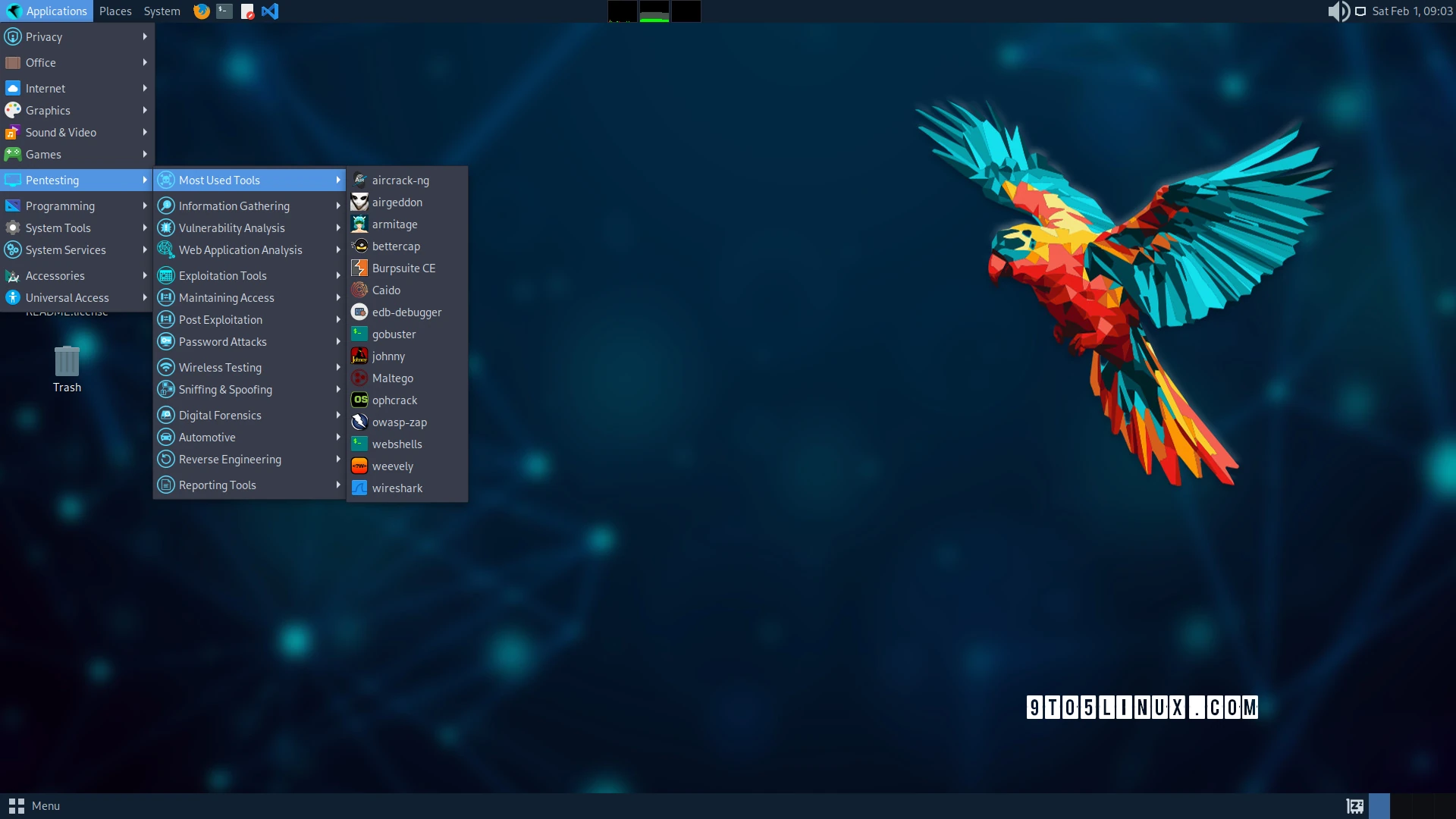
Image source: 9to5Linux
Parrot OS vs Kali Linux — Which One Should You Choose?
The debate between Parrot OS and Kali Linux is a staple of the security community. While Kali remains the industry standard for specialized penetration testing, Parrot OS 7 offers a more balanced approach that many users find preferable for long-term use. According to historical data , Parrot's focus on privacy and development tools makes it a more versatile choice for those who don't want to switch operating systems for their daily tasks.
| Feature | Parrot OS 7 Echo | Kali Linux |
|---|---|---|
| Base Kernel | Debian 13 (Trixie) | Debian Testing |
| Default Desktop | KDE Plasma 6 | XFCE |
| Privacy Tools | AnonSurf (Native) | Manual Setup Required |
| AI Integration | Native LLM Support | Third-party plugins |
| Daily Driver Use | High (Home Edition) | Moderate (Specialized) |
Resource efficiency is another area where Parrot stands out. The Architect Edition can run on as little as 256MB of RAM, making it a top choice for cloud VPS deployments or older hardware. Kali, while powerful, tends to have a heavier baseline requirement for its full graphical suite. Furthermore, Parrot's inclusion of compilers and IDEs out-of-the-box makes it a strong contender for developers who also work in security.
Choosing the Right Edition for Your Needs
Parrot OS is not a one-size-fits-all solution. The project offers several distinct editions tailored to different user profiles. Understanding these differences is crucial before you begin your installation.
Parrot Security Edition Pro
This is the flagship version, containing a massive repository of tools for penetration testing, digital forensics, and reverse engineering. It is designed for security professionals who need a complete laboratory environment ready to go from the first boot. It includes everything from
aircrack-ng
to advanced AI-assisted exploit frameworks.
Parrot Home Edition Daily
The Home Edition is optimized for daily use. It strips away the aggressive hacking tools in favor of a clean, privacy-focused environment for web browsing, document editing, and software development. It is widely regarded as one of the best Linux distributions for users who value anonymity without the overhead of a full security suite.
Parrot Architect Custom
For power users, the Architect edition provides a minimal CLI-only base. This allows you to build a custom environment from the ground up, selecting only the specific packages and desktop environments you require. It is the preferred choice for creating lightweight virtual machines or specialized "cyber-decks."
How to Install Parrot OS on Your Machine
Installing Parrot OS 7 is a straightforward process, whether you are using physical hardware or a virtualized environment. For most users, testing the OS in a virtual machine is the safest way to explore its features without modifying your primary system.
VirtualBox Setup for Beginners
- Download the Parrot Security ISO from the official website.
- In VirtualBox, create a new VM with at least 4GB of RAM (8GB recommended) and 60GB of SSD space.
- Attach the ISO to the virtual optical drive and boot the VM.
- Select "Try/Install" from the GRUB menu.
- Once the desktop loads, click the "Install Parrot" icon and follow the Calamares installer prompts.
sha256sum parrot-security-7.0.iso
in your terminal to compare it against the official hash.
For cloud-based labs, Parrot is also available on the Microsoft Marketplace , allowing for rapid deployment of security environments in Azure. This is particularly useful for teams conducting distributed penetration tests or training exercises.
Mastering the Parrot OS Privacy Stack
One of the most significant advantages of Parrot OS is its native focus on anonymity. While other distros require manual configuration of Tor and proxy chains, Parrot integrates these features directly into the system tray via AnonSurf .
AnonSurf Explained
AnonSurf is a specialized script that routes all system traffic through the Tor network. Unlike a browser-based VPN, AnonSurf captures traffic from all applications, including terminal commands and background services. In Parrot 7, AnonSurf has been updated with better "kill-switch" logic, ensuring that if your Tor connection drops, your real IP address is never leaked to the open internet.
Hardening with Whonix Techniques
For users requiring extreme security, Parrot can be further hardened by importing the
security-misc
package from the Whonix project. This package implements kernel-level hardening and restricts access to sensitive system information. However, this can sometimes lead to the
console
group error. To fix this, simply run:
sudo adduser [your-username] console
This command ensures your user has the necessary permissions to interact with the hardened console environment without breaking system functionality.
How to Fix Common Parrot OS Update Errors
Even a stable system like Parrot OS 7 can encounter issues, particularly when dealing with third-party repositories or ARM-based hardware like the Raspberry Pi. Being able to troubleshoot these errors is a key skill for any Linux user.
The Expired Repository Key Fix
Occasionally, you may see a GPG error stating that a public key is not available. This usually happens when a repository key expires or is rotated. You can resolve this by manually fetching the new key from the Ubuntu keyserver:
sudo apt-key adv --keyserver keyserver.ubuntu.com --recv-keys [Insert-Key-ID-Here]
Alternatively, the new
parrot-upgrade
tool (the Rust-based updater) often handles these rotations automatically, making it a safer choice than standard
apt upgrade
.
ARM Optimization and Dependency Conflicts
If you are running Parrot on a
uConsole
or
Raspberry Pi
, you might encounter "held broken packages" during an update, often related to
libasound2
. To resolve this, use the following command to force the installation of dependencies:
sudo apt --fix-broken install && sudo parrot-upgrade
This sequence ensures that the package manager resolves conflicts before the Rust-updater performs the final system sync.
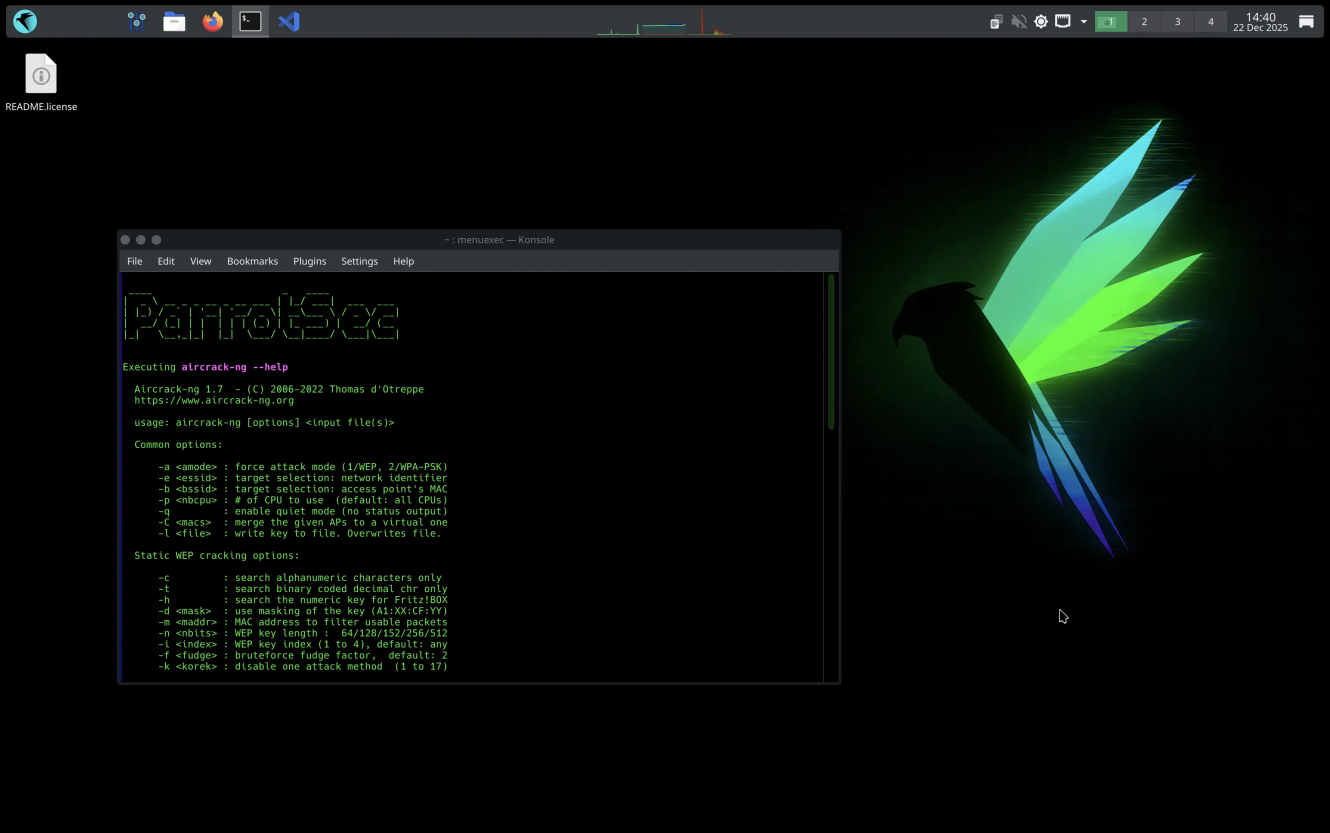
Image source: parrotsec.org
Frequently Asked Questions
Many users find Parrot OS to be a top choice for beginners because of its Home Edition. While Kali is very focused on penetration testing, Parrot provides a gentler learning curve by offering a version that functions like a standard desktop OS while still giving you access to the full security repository when you need it.
Yes, Parrot OS Home is specifically designed to be a "daily driver." It includes all the necessary software for productivity, such as LibreOffice, VLC, and Firefox, while maintaining a high level of privacy. The transition to KDE Plasma 6 in version 7 makes it even more viable as a primary OS for both work and play.
Parrot OS supports NVIDIA drivers through the non-free repositories. However, because Parrot focuses on stability and open-source principles, you may need to manually enable these repositories and install the drivers using the
nvidia-detect
tool to ensure you get the correct version for your hardware.
While
apt upgrade
is the standard Debian command,
parrot-upgrade
is a custom script (now powered by Rust in version 7) that handles Parrot's specific repository structure. It performs additional checks for kernel mismatches and ensures that security tools are updated correctly without breaking system dependencies.
Parrot OS is a professional tool designed for ethical hacking, security auditing, and educational purposes. Using the OS itself is perfectly legal. However, using the tools included in the Security Edition to access systems without authorization is illegal. Always ensure you have explicit permission before performing any security testing.
Final Thoughts on Parrot OS 7 Echo
Parrot OS 7 "Echo" represents a significant advancement for the Debian-based security ecosystem. By embracing AI integration and modernizing its core architecture, it remains a top-tier option for professionals and enthusiasts alike.
- Debian 13 Base: Provides a stable yet modern foundation for all security tasks.
- AI Hacking Tools: Notably innovative features that automate reconnaissance and script analysis.
- KDE Plasma 6: A significant step forward in desktop usability and performance.
- Rust-Based Updater: Offers faster, safer, and more reliable system maintenance.
- AnonSurf Privacy: Sets a high standard for out-of-the-box anonymity.
- Hardware Versatility: Exceptional support for everything from high-end workstations to ARM cyber-decks.
If you are looking for a versatile, privacy-focused Linux distribution that can handle both professional security auditing and daily productivity, Parrot OS 7 is a highly recommended choice to download today.

Why Ctrl+Alt+Del Changed Computing and Internet Culture Forever
Explore the history of the Ctrl+Alt+Del command, the famous webcomic, and troubleshooting tips for Windows, Mac, and Linux systems.


How to Use Google AI Mode to Get Better Search Results with Gemini
Learn how to use Google AI Mode, trigger Deep Search, and fix Workspace issues. Master Gemini-powered search with our expert tips for 2026.


How to Fix an Acer Laptop Stuck on the Explore Beyond Limits Screen
Stuck on the Acer Explore Beyond Limits screen? Learn to fix boot loops, reset batteries, and repair Windows without data loss using expert steps.
