How to Fix the Outlokk Typo and Log In to Your Microsoft Outlook Account Safely
If you typed "outlokk" in your browser, you have made a common spelling error. To access your email safely, navigate directly to outlook.live.com for personal accounts or microsoft365.com for business and school accounts. Avoid clicking on search results for misspelled terms, as these may lead to phishing sites designed to steal your credentials.
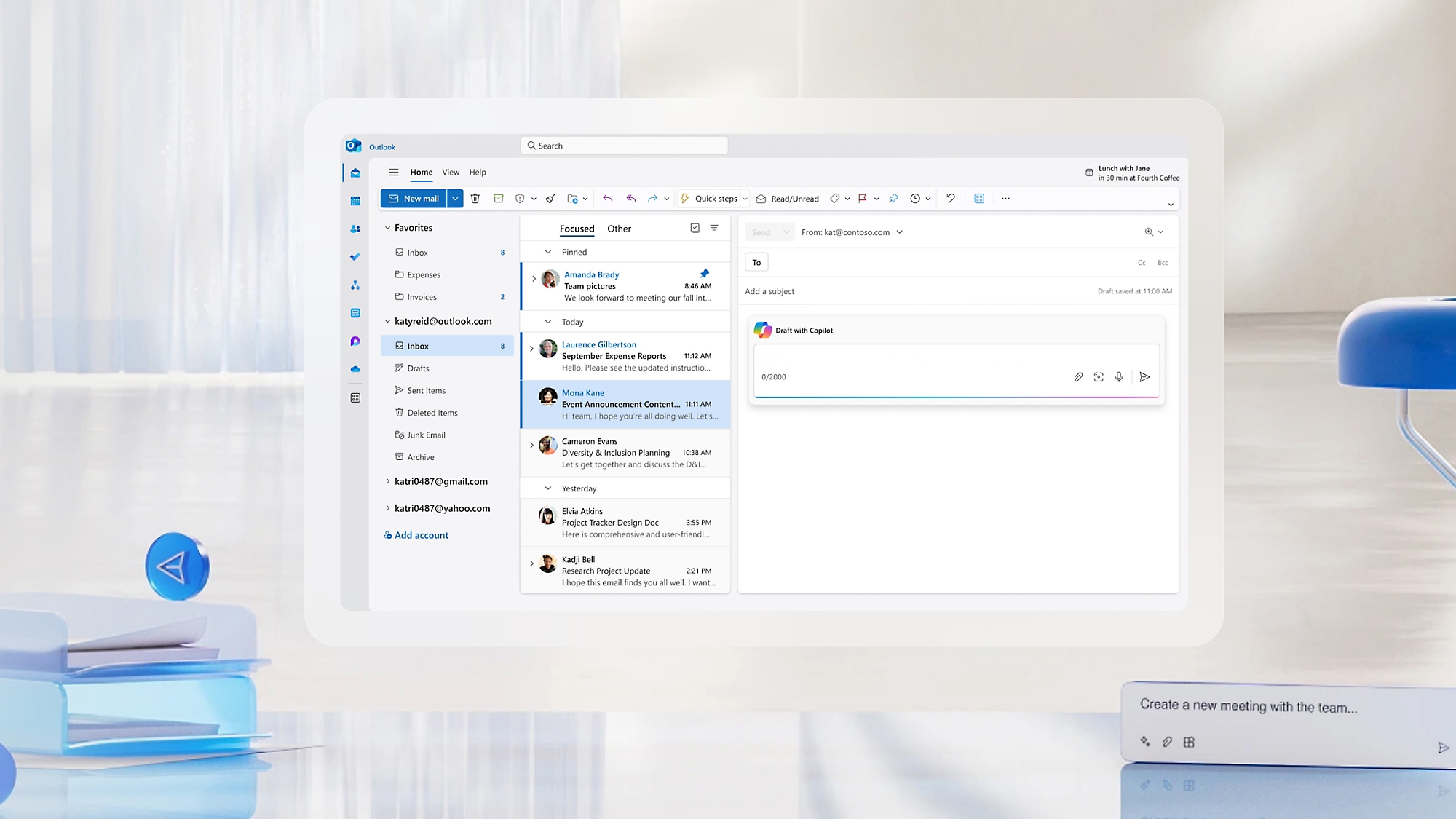
Image source: Microsoft
Why You Keep Typing Outlokk and How to Reach the Real Login Page
Typing "outlokk" instead of "Outlook" is one of the most frequent navigational errors on the web. This occurs primarily due to the proximity of the 'k' and 'l' keys on standard QWERTY keyboards, combined with the double-letter pattern that often confuses muscle memory. While it seems like a harmless mistake, it presents a significant security risk known as typosquatting .
The Dangers of Typosquatting Sites
Hackers often register domains like outlokk.com , outllok.com , or outlook-login.net . These sites are designed to look identical to the official Microsoft portal. When you enter your username and password, you aren't logging in; you are handing your credentials directly to cybercriminals. According to security researchers, these phishing portals are a primary vector for identity theft and corporate data breaches.
Safe Login Checklist
-
Check the URL:
Ensure the address bar reads
https://outlook.live.comorhttps://login.microsoftonline.com. - Look for the Padlock: Verify the SSL certificate is valid and issued to Microsoft Corporation.
-
Use Bookmarks:
Once you reach the correct page, press
Ctrl+D(Windows) orCmd+D(Mac) to bookmark it. This eliminates the need to type the URL manually in the future. - Enable MFA: Multi-Factor Authentication (MFA) ensures that even if you accidentally enter your password on a "outlokk" site, the attacker cannot access your account without your secondary device.
The Hotmail and Live Legacy
Many users who search for "outlokk" are actually trying to access older accounts. It is important to remember that Microsoft Outlook now serves as the unified portal for several legacy services. Whether your email ends in @hotmail.com, @live.com, @msn.com, or @passport.com, you will use the same Outlook.com login infrastructure. Your old credentials remain valid, and your historical emails are preserved within the modern interface.
How to Fix Common Outlook Login Errors and Sync Issues
Even when you type the URL correctly, technical hurdles can prevent you from accessing your inbox. As of late 2026, several "known issues" continue to affect both the web and desktop versions of the platform. Understanding these specific error codes can save you hours of frustration.
Solving the 0x80004005 Sync Error
The 0x80004005 error is a generic but persistent failure that typically indicates a "mailbox folder sync" conflict. This often happens when the local cache on your computer becomes desynchronized from the Microsoft Exchange server. To fix this, you should try the "Repair" function within your Account Settings. If that fails, deleting the
.ost
file in your local AppData folder forces Outlook to rebuild the cache from scratch, which usually resolves the conflict.
Fixing Gmail and Yahoo Synchronization Failures
If you use the Outlook app to manage third-party accounts like Gmail or Yahoo, you may encounter errors 0x800CCC0E or 0x800CCC0F . These are almost always related to IMAP settings or "App Passwords." Modern security standards require you to generate a specific 16-digit App Password from your Google or Yahoo security settings rather than using your primary account password. Without this, the Outlook handshake will fail repeatedly.
The Kaspersky Antivirus Conflict
A specific technical conflict has been identified where Outlook crashes unexpectedly for users running Kaspersky security software. This is often due to the "Email Anti-Virus" component attempting to scan encrypted packets in a way that triggers a memory violation. According to Microsoft's Known Issues documentation , disabling the email scanning plugin within the antivirus settings—while keeping the primary system shield active—is the recommended workaround until a permanent patch is issued.
Should You Use the New Outlook or Stick With the Classic Version?
Microsoft is currently in a multi-year transition from "Classic Outlook" (the Win32 desktop application) to the "New Outlook" (a WebView2-based application). This has caused significant confusion for users who find the interface changing without their explicit consent. Choosing the right version depends entirely on your specific workflow requirements.
Defining the "New Outlook"
The New Outlook is essentially a highly optimized wrapper for the web version of the service. It is lightweight, updates automatically, and offers a consistent experience across Windows and Mac. However, because it is not a native Win32 application, it lacks support for COM Add-ins, which are essential for many enterprise tools like specialized CRM integrations or advanced encryption plugins.
Comparison: Outlook Web vs. New Outlook vs. Classic Outlook
| Feature | Web Version | New Outlook (App) | Classic Outlook (Win32) |
|---|---|---|---|
| Offline Access | Limited | Basic | Full Support |
| COM Add-in Support | No | No | Yes |
| Multiple Account Types | Single Login | Unified Inbox | Advanced Profiles |
| UI Customization | Moderate | Moderate | Extensive |
| Resource Usage | Low | Low | High |
If you are a power user who relies on "Room Finder" for complex office scheduling or requires deep integration with local files, Classic Outlook remains a strong contender for your primary tool. Conversely, for casual users who want a fast, modern interface that mirrors their mobile experience, the New Outlook is an excellent choice. You can toggle between them using the "Try the New Outlook" switch located in the top right corner of the application.
How to Manage Your 15GB Mailbox and 5GB Cloud Storage Limits
One of the most common reasons users stop receiving emails is the "Storage Trap." Microsoft separates your storage into two distinct buckets, and if either one is full, your email service will be disrupted. This is a frequent point of confusion for those who see they have "plenty of space" in their mailbox but are still blocked from sending messages.
The Difference Between Mailbox and Cloud Storage
As of 2026, free accounts typically receive 15 GB of mailbox storage (for the text of your emails) and 5 GB of OneDrive cloud storage (for attachments and photos). If your OneDrive hits the 5 GB limit, Microsoft will block your ability to send or receive new emails, even if your 15 GB mailbox is nearly empty. This is because attachments are now technically stored in the cloud "shadow" of your inbox.
Upgrade Paths and Pricing
If you find yourself constantly deleting emails to stay under the limit, several upgrade paths are available. According to official Microsoft 365 data , the tiers are structured as follows:
- Microsoft 365 Basic: Offers 100 GB of Mailbox storage and 100 GB of Cloud storage for approximately $19.99/year.
- Microsoft 365 Personal: Provides a 50 GB premium mailbox and 1 TB of Cloud storage for $99.99/year.
- Microsoft 365 Family: Supports up to 6 people, each receiving their own 1 TB of storage, totaling 6 TB for the household.
Cleaning Strategies to Avoid Paying
Before upgrading, try these three steps: First, use the "Filter" button in your inbox to sort by "Size" and delete emails with large attachments. Second, empty your "Deleted Items" folder, as these still count against your quota. Third, check your "Sent Items" for large outgoing files that you no longer need to keep.
How to Master Your Inbox Using the Four Ds Productivity Framework
For users who receive more than 30 emails a day, simply "checking email" is not enough. The Microsoft Product Team recommends a specific workflow known as the "Four Ds." This strategy is designed to help you reach "Inbox Zero" by making immediate decisions on every piece of incoming mail.
If the email requires no action and has no long-term value, delete it immediately or archive it.
If the task takes less than two minutes (e.g., a quick confirmation), do it now. Don't let it sit.
If you aren't the right person to handle the request, forward it to the appropriate stakeholder.
If it takes longer than two minutes, flag it for later or move it to a "To-Do" folder for deep work.
To make this framework even more effective, you can set up Outlook Rules . For example, you can create a rule that automatically "Delegates" any email with the word "Invoice" to your accounting department's shared mailbox, or a rule that "Deletes" any newsletter that doesn't contain your specific name in the "To" field. This automation ensures that by the time you open your inbox, the "Delete" and "Delegate" phases are already partially complete.
How to Use Microsoft Copilot AI Within Your Inbox
Artificial Intelligence has become a core component of the Outlook experience through Microsoft Copilot. This tool is not just a chatbot; it is integrated directly into the drafting and reading panes to help you process information faster. However, there are specific eligibility requirements that often confuse users.
Eligibility and Requirements
Copilot currently works with @outlook.com, @hotmail.com, @live.com, and @msn.com addresses. However, having one of these addresses is not enough—you must also have a qualifying Microsoft 365 subscription (Personal or Pro). If you are using a free account, the Copilot buttons will not appear in your interface. Furthermore, Copilot features are currently more robust in the New Outlook and Web versions; users on the Classic desktop version may find some AI features missing or limited to "Summarize" only.
Drafting and Summarizing
The most impactful use of Copilot is the "Summarize" feature. If you are added to a long email thread with 20+ replies, Copilot can provide a bulleted summary of the key decisions and pending actions in seconds. When drafting, you can provide a short prompt like "Write a professional decline to this meeting invitation," and Copilot will generate a polished response that matches the tone of your previous communications.
Mobile Productivity Tips for the Outlook App
The Outlook mobile app is widely regarded as one of the top choices for on-the-go email management. It supports not only Microsoft accounts but also Gmail, Yahoo, and iCloud. To get the most out of it, you should customize the interface to match your "Four Ds" workflow.
Play My Emails
For commuters, the "Play My Emails" feature uses Cortana to read your new messages aloud. It is intelligent enough to skip over repetitive headers and can even summarize your daily schedule. You can respond to emails using voice commands, making it a safe way to stay productive while driving or walking.
Customizing Swipe Gestures
By default, swiping might not match your needs. Go to Settings > Swipe Options to set your preferences. A popular configuration is setting "Swipe Left" to Archive (the Delete/Archive phase of the Four Ds) and "Swipe Right" to Snooze (the Defer phase). Snoozing an email removes it from your inbox and brings it back at a time when you are better prepared to handle it, such as "Tomorrow at 9:00 AM."
Frequently Asked Questions
This error occurs because "outlokk" is a misspelling. Windows Search and your web browser are looking for a file or website that does not exist. To fix this, ensure you are searching for "Outlook" in your Start menu. If you are trying to reach the website, manually type outlook.com into your browser's address bar rather than relying on search suggestions that might repeat your typo.
Yes, Hotmail is still fully active, but it has been rebranded under the Outlook.com umbrella. You do not need to change your @hotmail.com address; you can continue to use it to log in at the official Outlook portal. All your folders, contacts, and historical data remain intact, though you will be using the modern Outlook interface to access them.
If you have lost your phone and cannot use your MFA app, you must use the "Account Recovery Form" on the Microsoft login page. You will be asked to provide information about your account, such as recent email subject lines or contacts you've messaged. This process can take up to 24 hours for security reasons. It is highly recommended to generate a "Recovery Code" in your security settings today and store it in a physical safe for such emergencies.
Yes, Microsoft offers a robust free tier for Outlook. This includes access to the web version (Outlook.com) and the mobile apps for iOS and Android. The free tier includes 15 GB of email storage and 5 GB of cloud storage. While it includes advertisements in the "Other" inbox tab, the core features of emailing, calendaring, and contact management are fully functional without a paid Microsoft 365 subscription.
Slowness in the Classic Outlook app is usually caused by a bloated cache or too many active add-ins. Try starting Outlook in "Safe Mode" (hold
Ctrl
while clicking the app icon). If it runs faster, the issue is likely a third-party add-in. You should also check your
.ost
file size; if it exceeds 25 GB, performance will degrade significantly. Compacting the database or archiving old emails can restore speed.
The Bottom Line
Mastering your inbox starts with reaching the correct destination and ends with efficient management of your daily communications. By avoiding common typos and understanding the technical nuances of the platform, you can ensure your digital workspace remains secure and productive.
- Verify the URL every time you log in to avoid "outlokk" phishing sites and protect your credentials.
- Monitor both storage buckets (15GB Mailbox and 5GB OneDrive) to prevent your email service from being blocked.
- Choose the right version for your needs; use Classic for COM add-ins and New Outlook for a modern, lightweight experience.
- Apply the Four Ds (Delete, Do, Delegate, Defer) to every email to maintain a manageable inbox.
- Fix sync errors like 0x80004005 by repairing your local cache or checking for antivirus conflicts.
- Leverage Copilot AI to summarize long threads and draft professional replies if you have a qualifying subscription.
To secure your account immediately, navigate to your security settings and enable Multi-Factor Authentication today.
All trademarks, copyrighted content, and quoted material referenced in this article belong to their respective owners. Brief excerpts are used under fair use (17 U.S.C. § 107) for purposes of commentary, criticism, and informational reporting. This article is not affiliated with or endorsed by Microsoft Corporation.
-
Topic: Outlook Log In | Microsoft 365https://www.microsoft.com/en-us/microsoft-365/outlook/log-in
-
Topic: Microsoft Outlook Personal Email and Calendarhttps://www.microsoft.com/en-us/microsoft-365/outlook/email-and-calendar-software-microsoft-outlook
-
Topic: Microsoft Outlook - Apps on Google Playhttps://play.google.com/store/apps/details?id=com.microsoft.office.outlook&hl=en_US

How to Sign In to Your MSN Email Account and Fix Common Login Problems
Access your @msn.com email. Fix login loops, recover old accounts, and manage Microsoft storage with this troubleshooting guide.

How to Access Your AOL Mail Inbox and Fix Common Login Problems
Access your AOL Mail inbox, fix login errors, and set up IMAP settings. Learn how to use Passkeys and recover old accounts without a phone number.


How to Fix the 'Sorry We Couldn't Find' Error in Office and Web Apps
Resolve 'Sorry we couldn't find' errors in Word, Excel, Power BI, and Vimeo. Fix broken file paths, cache issues, and permission bugs today.