
How to Use the inurl:modified Operator and Manage URL Modifications Effectively
The
inurl:modified
operator is a Google Dorking command used to find web pages where the word "modified" appears in the URL path. This is frequently used by security researchers to locate
open directories
(e.g., "Last Modified" file lists) or specific software builds. Beyond searching,
URL modification
is a core development task used for pre-populating forms, routing traffic through enterprise reverse proxies, and protecting user privacy by stripping tracking parameters.
1. What Does the inurl:modified Search Operator Actually Do?
The
inurl:
operator is a specialized search command that instructs Google to restrict results to pages where the specified string is part of the URL. When you search for
inurl:modified
, you are asking the search engine to find every indexed page that contains that specific word in its web address. However, the context of this search is what makes it a top choice for technical professionals.
In the world of Open Source Intelligence (OSINT) and cybersecurity, "modified" is a high-signal keyword. Many web servers, when configured to show an "Index of" page (an open directory), automatically generate a table with columns such as "Name," "Size," and "Last Modified." By searching for the word in the URL, researchers can often bypass standard landing pages and find raw file repositories that were never intended for public navigation.
It is important to distinguish between searching for the *word* "modified" and searching for a file's *metadata*. Google does not allow you to search for a specific "Last Modified" date directly through a URL operator; instead, you use
inurl:modified
to find the pages that *display* that metadata. This technique is widely regarded as a foundational step for security auditors and developers looking for legacy documentation or specific software versions that are no longer linked on a company's primary site.
According to research into search operator functionality, these "dorks" are exceptionally strong tools for data discovery. They allow users to filter out the noise of modern, SEO-optimized web pages to find the underlying file structures of the internet. Whether you are a developer looking for a specific build or a researcher investigating exposed data, understanding the literal path of a URL is a significant advancement in your search capabilities.

Image source: Bitly
2. How to Find Open Directories and Files Using Google Dorks
Finding open directories requires a combination of operators. While
inurl:modified
is a piece of the puzzle, it works most effectively when paired with
intitle:
and file type exclusions. The goal is to find the "Index Of" pages that servers generate when a default
index.html
file is missing.
The Anatomy of an "Index Of" Search
A standard string used by researchers is:
intitle:"index of" +"last modified" +parent directory
. This query looks for the specific text found on Apache and Nginx directory listings. By adding
inurl:modified
, you can further refine the results to servers that use specific naming conventions for their modified file logs.
Advanced Filtering for Media and Data
If you are looking for specific data types, such as raw logs or media files, you must exclude standard web pages to avoid being buried in blog posts. A highly effective string for finding media directories while excluding HTML noise is:
-inurl:(htm|html|php) intitle:"index of" +"last modified" +description +size +(wma|mp3)
This command tells Google to ignore any URL containing common web extensions, focusing instead on directories that list WMA or MP3 files. This method ranks among the top techniques for OSINT researchers because it targets the server's file system directly rather than the rendered content.
When using Google Dorks, always respect robots.txt and legal boundaries. While these files are technically "public" because they are indexed, accessing private data without authorization can have legal implications. Use these tools for ethical security research and finding public-domain resources.
Locating Specific Software Versions
Developers often need to find a specific version of a library or a legacy driver. By using
inurl:modified
alongside a version number (e.g.,
inurl:modified "v2.4.1"
), you can often find the exact directory where those files are stored. This is a popular choice for troubleshooting systems where the latest update has introduced a regression and a rollback is necessary.
3. Practical Ways to Modify URLs for Development and Marketing
In a professional environment, "modifying a URL" usually refers to programmatically altering a link to achieve a specific goal, such as tracking a user or passing data between applications. This is a core skill for both marketers and full-stack developers.
Pre-populating Form Fields
One of the most common uses of URL modification is pre-populating form fields. Platforms like Wufoo allow you to append data to the end of a URL so that when a user clicks it, the form is already filled out. This is done using query parameters.
For example, if you want to pass a user's ID to a form, you might modify the URL like this:
example.com/form/?field123=User88
. To chain multiple parameters, you use the ampersand (
&
) symbol:
example.com/form/?field123=User88&field456=ProPlan
. This sets a high standard for user experience by reducing the friction of manual data entry.
Enterprise Routing with Reverse Proxies
In large-scale enterprise environments, URLs are often modified by security appliances before they ever reach the back-end server. A notable example is IBM WebSEAL , which uses a process called "junctioning." According to IBM documentation , a reverse proxy must modify the URL path to include junction information so the request can be routed to the correct internal server.
If a client requests
https://portal.company.com/dashboard.html
, the proxy might modify this to
https://internal-server-01/jct/dashboard.html
. This modification is essential for maintaining session integrity and security across a distributed network architecture. Without these automated modifications, enterprise routing would be significantly more complex and prone to failure.
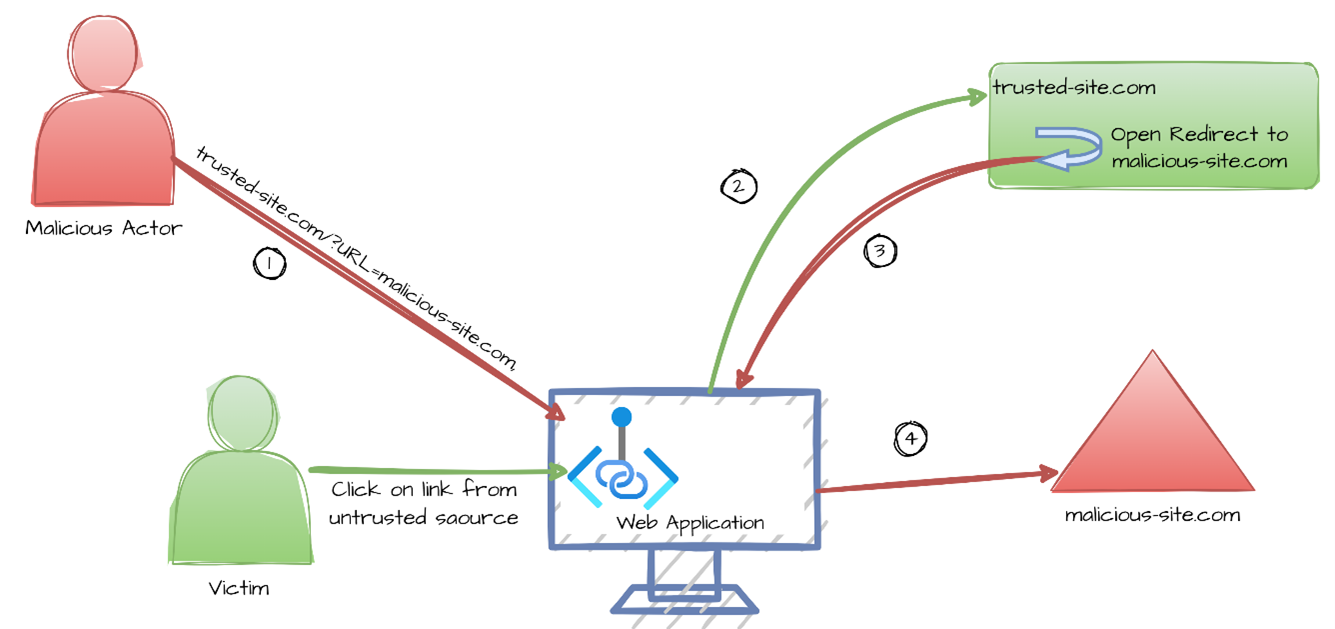
Image source: Common Weakness Enumeration - MITRE
4. Why Are My URLs Being Modified Automatically?
Sometimes, URLs are modified without your direct intervention. This is usually the result of security filters, browser privacy settings, or system-level bugs. Understanding these "hidden" modifications is critical for troubleshooting broken links.
The WhatsApp/Meta Anti-Phishing Trap
A common frustration for marketers using WhatsApp Business API is the "message failed" error. This often happens because Meta has strict rules regarding URLs in message templates. Specifically, you cannot place a full URL inside a body variable (e.g.,
{{1}}
). If the system detects a URL string within a variable at send-time, it will block the message to prevent phishing. As noted by
GoHighLevel support
, the solution is to use a "Call to Action" button with a dynamic suffix rather than putting the link in the text body.
The ArcGIS Restore Bug
In the world of Geographic Information Systems (GIS), the ArcGIS WebGIS DR process is a critical tool for disaster recovery. However, users have reported a specific bug where Portal URLs are unexpectedly modified during the "rename and restore" phase. This typically occurs due to network glitches or a lack of robust error handling in the restoration script, causing the system to point to an incorrect or malformed URL. This issue has been documented in environments running version 10.7.1, highlighting the need for careful validation after any system restore.
Browser-Level Query Stripping
Privacy-focused browsers, such as the
Stoutner Privacy Browser
, automatically modify URLs to protect user identity. They strip out tracking parameters like
utm_source
,
utm_medium
, and
utm_campaign
. Furthermore, they may strip Google AMP (Accelerated Mobile Pages) redirects, sending the user directly to the original publisher's site. While this improves privacy and page load speed, it can occasionally break site functionality that relies on those specific parameters.
5. Advanced Strategies for Cleaning and Transforming URLs
For developers working with data integration tools like Celigo or NetSuite, modifying URLs is a daily task. However, the *method* of modification matters significantly for system stability.
Handlebars vs. JavaScript for URL Logic
When you need to transform a URL—for example, stripping "www." from a domain before performing a record lookup—you have two main choices: Handlebars expressions or JavaScript hooks. While Handlebars is simpler, it is often less robust. A complex
{{replace}}
expression can easily trigger a parse error if the input data is unexpected.
- Handles complex logic and edge cases easily.
- Allows for robust error handling (try/catch).
- Requires more setup time.
- Widely regarded as the more stable choice for enterprise integrations.
According to experts at Celigo , moving URL logic to a "JavaScript hook" or a dedicated "Transformation step" is a significant step forward in reliability. This approach ensures that the URL is cleaned and validated before it ever reaches the destination system, preventing the "cascading failures" that often plague automated workflows.
6. Comparison of URL Modification Methods
| Method | Primary Use Case | Typical Tool | Risk Level |
|---|---|---|---|
| Query Parameters | Form Pre-population | Wufoo / SurveyMonkey | Low |
| Google Dorking | OSINT / Data Discovery | Google Search | Low (Ethical) |
| Junctioning | Enterprise Routing | IBM WebSEAL | Medium |
| JS Transformation | Data Integration | NetSuite / Celigo | Medium |
| Query Stripping | Privacy Protection | Stoutner Browser | Low |
7. Frequently Asked Questions
inurl:
operator looks for a single word or string within the URL. In contrast,
allinurl:
requires that every word you list after the operator must appear somewhere in the URL. For example,
allinurl:modified backup 2026
would only return pages where all three words are present in the web address, making it a much more restrictive search.
inurl:modified
only finds the literal word "modified" in the URL string. It does not search the page's actual update timestamp. To find recently updated pages, you should use the "Tools" menu in Google Search and filter by "Past 24 hours" or "Past week," or use the
site:
operator combined with date-range filters.
utm_source
,
utm_medium
,
utm_campaign
,
gclid
(Google Click ID), and
fbclid
(Facebook Click ID). Stripping these prevents advertisers from tracking your path from one site to another.
Key Takeaways
- inurl:modified is a powerful discovery tool for finding open directories and specific file versions.
-
Google Dorking
requires combining operators like
intitle:and-inurl:for the most accurate results. - URL Pre-population via query parameters is a top-tier method for improving form conversion rates.
- Enterprise Routing often relies on "junctioning," where a proxy modifies URLs to maintain security and session state.
- Automatic Modifications by Meta or ArcGIS are often security features or system bugs that require specific technical workarounds.
- JavaScript Hooks are widely regarded as more stable than Handlebars for complex URL transformations in data integrations.
- Privacy Browsers protect users by stripping tracking queries, which can occasionally impact marketing analytics.
To ensure your links remain functional and secure, always test modified URLs in a staging environment before deploying them to production systems.
Copyright Notice: All trademarks, copyrighted content, and quoted material referenced in this article belong to their respective owners. Brief excerpts are used under fair use (17 U.S.C. § 107) for purposes of commentary, criticism, and informational reporting. This article is not affiliated with or endorsed by Google, Meta, IBM, or Esri.

How to Use the inurl: Search Operator for SEO Audits and Site Security
Learn to use the inurl: operator for SEO audits and security. Fix errors and master advanced search strings for 2026.


How to Use the Google inurl Search Operator to Find Specific Pages and Subdirectories
Learn how to use the inurl: operator for SEO audits, link building, and finding subdirectories. Fix common errors and master advanced syntax rules.

VTchromizer is Now VT4Browsers and Here Is How to Use It
Learn how to use VTchromizer, now VT4Browsers + Google TI. Scan URLs and files with VirusTotal, manage API quotas, and protect your browser today.